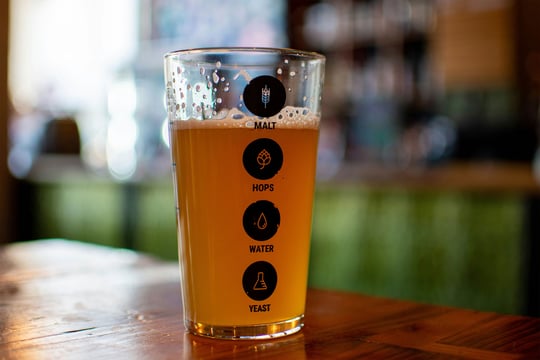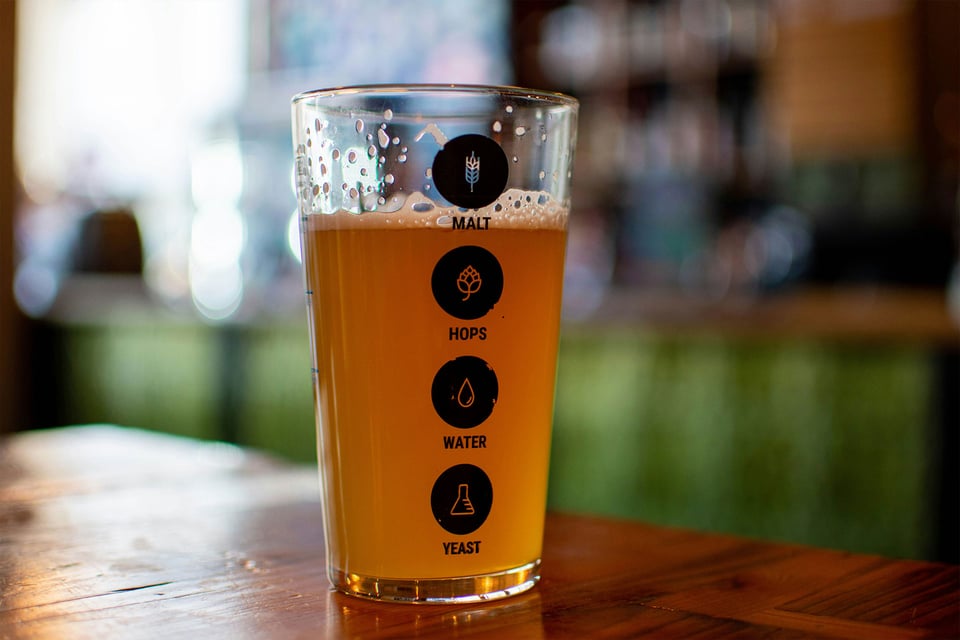
It started in Copenhagen, as many good conversations do, over a pint of lager.
Biosafe’s Janne Ylärinne was sitting with two experienced scientists, both with decades of work in microbiology and fermentation behind them, when the discussion turned to a mind-boggling topic: where did lager yeast actually come from?
What followed was a fascinating reminder that some of the world's most familiar foods and drinks often have unexpectedly complex histories.
Lager is, after all, the standard beer for much of the world. Its clean, crisp flavour profile makes it approachable, versatile and widely enjoyed across cultures. Yet behind that apparent simplicity lies a remarkable story involving biology, geography, human ingenuity and perhaps a touch of luck.
Like many innovations that eventually become commonplace, lager beer may owe its existence to a chain of unlikely events that no one could have planned.
A yeast with two parents
The yeast most commonly used for lager brewing, Saccharomyces pastorianus, is now known to be a hybrid species. One parent is Saccharomyces cerevisiae, the familiar yeast used for centuries in brewing, baking and winemaking. The other is a cold-tolerant species known as Saccharomyces eubayanus, which contributes traits that enable efficient fermentation at lower temperatures. The combination of genetic traits from both parental species is believed to play an important role in the flavour characteristics associated with lager beers.
The hybrid nature of lager yeast was recognised several decades ago, but the identity of the cold-tolerant parent remained unknown until 2011. That year, researchers isolated S. eubayanus from forests in Patagonia and demonstrated that it was an exceptionally close genetic match to the previously unidentified portion of the lager yeast genome.
For brewing science, this was a significant breakthrough. At the same time, it raised an intriguing question: what was the connection between a yeast discovered in South American forests and a brewing tradition that emerged in Central Europe?
A journey across continents?
Since the discovery of S. eubayanus, researchers have worked to reconstruct its evolutionary history. Studies of its worldwide diversity have found particularly high genetic diversity among Patagonian populations, suggesting that the region may represent an ancestral home or major centre of diversification for the species.³
This led to a compelling hypothesis. Could the cold-tolerant yeast have travelled, directly or indirectly, from the Americas to Europe during the age of exploration and expanding global trade? If so, it may eventually have found its way into brewing environments where it hybridised with domesticated brewing yeast.
More recent studies have identified S. eubayanus in Asia, North America and Europe. In 2022, researchers reported the first naturally occurring European isolates from Ireland, while the same study found that Tibetan isolates made a particularly strong contribution to the S. eubayanus component of lager yeast. The wider mystery surrounding the species and its origins is explored in José Paulo Sampaio’s 2022 review.
It makes for a wonderfully neat story. Biology, ships, trade routes and beer all meet in the same glass. It is an attractive theory, but science rarely proceeds in straight lines.
A further hypothesis published in 2023 turns the journey on its head. Based partly on historical brewing records, researchers proposed that S. eubayanus may already have been present in Bavarian brewing environments and that the crucial arrival was instead S. cerevisiae. They place a possible hybridisation event at Munich’s Hofbräuhaus sometime between 1602 and 1615.
There is therefore still plenty to discover about the precise origins of lager yeast. The Patagonian connection remains important and well supported, but the full story is still being assembled. The evidence continues to evolve as new strains are discovered and new genomic analyses are performed.
What seems increasingly clear, however, is that lager yeast emerged through a unique combination of biological opportunity and human practice.

Brewers were innovating before they knew the science
Long before anyone knew what yeast was, brewers were already shaping its evolution.
In Bavaria, brewers increasingly fermented and stored beer under cooler conditions, particularly during colder months. These practices favoured yeasts capable of performing well at lower temperatures. Over time, cold-tolerant strains became associated with what would eventually develop into lager brewing. The 2023 historical and genomic analysis of lager yeast origins provides a particularly interesting reconstruction of how brewing practices may have contributed to this process.
The brewers themselves could not have known they were selecting for particular microorganisms. Nevertheless, through observation and experience, they refined methods that consistently produced desirable results.
In modern terminology, you might call it strain selection. The Bavarian brewers probably called it making better beer.
This is a recurring theme in the history of innovation. Practical solutions often emerge long before the underlying science is fully understood. People observe patterns, repeat successful approaches and gradually improve them. Only later do researchers uncover the biological, chemical or physical mechanisms that made those innovations possible.
Lager yeast may be one of the most successful examples of this process. One or more hybridisation events, combined with suitable brewing conditions and generations of practical refinement, ultimately helped create a beer style that would dominate global markets.
Of course, the global success of lager beer did not result solely from the emergence of the hybrid yeast. In the late nineteenth century, the development of pure starter cultures by Emil Christian Hansen at the Carlsberg Laboratory, together with the spread of industrial refrigeration, allowed brewers to reproduce fermentations more consistently and on a much larger scale. These innovations helped transform a regional brewing tradition into a global industry.

Would lager yeast reach the market if it were discovered today?
Looking at this history from a modern perspective raises an interesting question.
If a similarly novel microorganism were discovered and proposed for use in food production today, its journey to market would look very different. The regulatory route would depend on how the microorganism was developed and used. In some cases, authorisation under the Novel Food Regulation could be required, while other applications might be assessed through different food or biotechnology regulatory frameworks.
In the European Union, novel food is defined as food that was not consumed to a significant degree by humans in the EU before 15 May 1997. The framework is governed by Regulation (EU) 2015/2283 and is designed to ensure that genuinely new foods and food ingredients are assessed for safety before reaching consumers.
Today, innovations can be evaluated with scientific tools that generations of early brewers could hardly have imagined. EFSA’s 2024 guidance for novel food applications sets out the scientific information needed to assess areas including the identity and composition of a novel food, its production process, proposed uses, nutritional information, toxicological information and allergenicity.
For developers, this makes regulatory strategy part of product development from an early stage. Novel foods face lengthy development and assessment timelines before commercialisation, and uncertainty around timing can be particularly challenging for smaller companies bringing new technologies or ingredients to market.⁸
Research published in 2025 examining 292 novel food applications submitted to EFSA found an average period of 2.56 years between submission and publication, with considerable variation between applications.⁸ For a start-up or scale-up, years matter. They influence financing, market-entry decisions and where a company chooses to commercialise first.
This makes the question particularly relevant for Europe. The continent remains a powerhouse in food science, microbiology and biotechnology research. The next challenge is creating regulatory pathways that combine rigorous safety assessment with sufficient clarity and predictability for companies trying to turn scientific discoveries into commercial products.

Lessons from a pint of lager
The story of lager yeast serves as a reminder that innovation is rarely linear.
Sometimes progress begins with a fortunate coincidence. A microorganism encounters a new environment. A brewer notices an unexpected result. A useful trait is preserved and refined. Over time, something entirely new emerges.
Centuries later, scientists may still be working to understand exactly how it happened.
That is part of what makes the history of lager yeast so fascinating. Beneath one of the world's simplest and most familiar drinks lies a story that spans continents, centuries and disciplines. It is a story of evolution, adaptation and human curiosity.
And perhaps there is one more lesson in the glass. Innovation needs room for discovery, experimentation and surprises. Modern regulation gives us the tools to assess those surprises with a level of scientific rigour our predecessors never had. The next challenge is making sure that rigorous science can lead to a sufficiently clear route towards commercialisation.
Europe has many of the researchers, companies and technologies capable of creating the next unexpected breakthrough in food. The real test is whether those breakthroughs can make the full journey from discovery to market here as well.
The challenge for modern food innovation is therefore not whether rigorous safety assessment should exist. It should. Rather, the question is how regulatory systems can continue to maintain high levels of consumer protection while also creating sufficiently clear and predictable pathways for innovation.
If lager yeast were discovered today, perhaps the most interesting question would be where that journey would lead first.
Get in touch to discuss your regulatory strategy!
 |
Nina VartiainenHead of Consulting, PhD |

Contact our experts and book an appointment for a free short consultation »
References
-
Libkind D. et al. Microbe domestication and the identification of the wild genetic stock of lager-brewing yeast. PNAS, 2011.
-
Sampaio JP. Saccharomyces eubayanus: a tale of endless mysteries. FEMS Yeast Research, 2022.
-
Nespolo RF. et al. An Out-of-Patagonia migration explains the worldwide diversity and distribution of Saccharomyces eubayanus lineages. PLOS Genetics, 2020.
-
Bergin SA. et al. Identification of European isolates of the lager yeast parent Saccharomyces eubayanus. FEMS Yeast Research, 2022.
-
European Commission. Novel Food.
-
European Commission. Novel Food Legislation (Regulation (EU) 2015/2283).
-
EFSA. Guidance on the scientific requirements for an application for authorisation of a novel food in the context of Regulation (EU) 2015/2283, 2024.
-
Le Bloch J.. et al. The novel food evaluation process delays access to food innovation in the European Union. npj Science of Food, 2025.
-
Hutzler M. et al. A new hypothesis for the origin of the lager yeast Saccharomyces pastorianus. FEMS Yeast Research, 2023.