|
Where our microbes live, and why the colon dominates
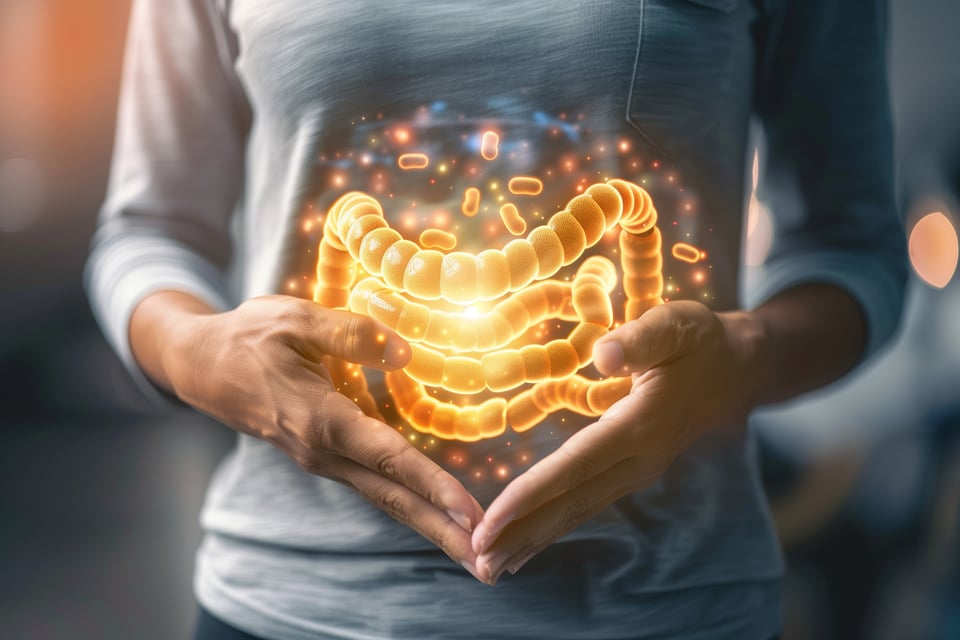
Microorganisms inhabit several body niches: the skin, urogenital tract, respiratory tract, oral cavity, and especially the gastrointestinal tract. Within the gut, microbial density varies greatly. The stomach and small intestine contain relatively low numbers of microorganisms because of acidity, bile, and rapid transit. The colon, by contrast, provides ideal conditions for dense microbial growth. It is largely anaerobic and packed with microbes that perform a wide range of metabolic functions.
Modern sequencing technologies and bioinformatics have transformed our understanding of this ecosystem. We can now identify microbial communities in much greater detail than before. Even so, understanding what these microbes actually do, and how they interact with the host, remains a major scientific challenge.
How the gut microbiota develops over a lifetime
The first microbes arrive at birth
The newborn gut is initially sterile, or very close to it, and colonisation begins almost immediately after birth. One of the strongest early influences is the mode of delivery. Infants born vaginally and infants born by Caesarean section typically acquire different early microbiota profiles, and these differences may persist for months or longer.
Breast milk further shapes early colonisation. It provides beneficial bacteria, including bifidobacteria, and contains oligosaccharides that selectively support their growth.
Diet drives complexity in childhood
As the infant diet expands, especially with the introduction of solid foods, the microbiome becomes more diverse and complex. By around eight years of age, it generally resembles the adult pattern and then remains fairly stable for many years.
Ageing brings gradual shifts
Later in life, the composition of the microbiota tends to change again. A common pattern is a decline in bifidobacteria and an increase in proteobacteria, reflecting broader physiological changes associated with ageing.
What the colonic microbiota actually does
1. It powers fermentation and host metabolism
Microbes in the colon ferment carbohydrates, proteins, and other substrates into short-chain fatty acids (SCFAs) such as acetate, propionate, and butyrate.
These metabolites make a meaningful contribution to host energy balance. Butyrate is especially important because it serves as a major energy source for colonic epithelial cells and also plays regulatory roles in appetite, glucose homeostasis, and cellular physiology.2)
2. It helps maintain the mucosal barrier
The microbiota influences both the development and the composition of the mucus layer lining the gut. The bacteria closest to the mucosa form a community that differs from the one in the gut lumen. These mucosa-associated microbes are in the most direct contact with host tissues and therefore have particular importance in host interaction.
3. It shapes immune development
The gut microbiota plays a central role in educating the immune system. It helps the host develop immunological tolerance and supports the ability of immune cells to distinguish between harmless and harmful stimuli.
4. It transforms chemicals and endogenous compounds
Gut microbes can modify a wide range of substances, including xenobiotics (external compounds), endogenous molecules, bile acids, and certain dietary components. These transformations can produce secondary bile acids as well as metabolites that are mutagenic or protective. This matters in food safety and microbial risk assessment, because microbial activity can change toxicity, solubility, and biological effect in ways that are relevant for strain evaluation.
5. It communicates with the brain
Through the vagus nerve, microbial metabolites can influence neuronal signalling. Altered microbiota patterns have been associated with anxiety, depression, and neurodegenerative conditions, although the causal relationships are still not fully understood. This area of research is often referred to as the gut-brain axis, and it remains one of the most active and complex fields in microbiome science.
Questions from the live webinar
Are yeasts important in the gut?
Yeasts such as Saccharomyces boulardii can function as probiotics, but yeasts are far less abundant than bacteria in the gut, and their broader physiological roles are still not well understood.
How effective is faecal microbiota transplantation? (FMT)?
Faecal microbiota transplantation, or FMT, is highly effective in certain cases of recurrent Clostridioides difficile infection. One open question is how stable the transplanted microbiota remains over the long term.
Can we define a healthy microbiome?
We are getting closer, but a fully defined “healthy microbiome” remains out of reach. Progress in analytics and bioinformatics may eventually allow both population-level and personalised definitions.
How do emulsifiers and ultra-processed foods affect the microbiome?
Strong effects have been observed in extreme dietary patterns. More subtle effects from food processing require more sensitive analytical tools, and these methods are now emerging.
How is toxicity assessed in microbial strains?
Current guidance focuses mainly on known toxins and biogenic amines. Unknown metabolites remain more difficult to assess, although developments in metabolomics and bioinformatics are expected to improve predictability.
Are you open to research collaboration?
Yes. Prof. von Wright welcomed discussions around research collaboration, and the same applies more broadly to Biosafe. Our team works at the intersection of microbiology, safety assessment, bioinformatics, and regulation, and we are always interested in relevant scientific and applied collaborations. Whether the topic is gut microbiota, probiotics, microbial safety, or product development, we are happy to explore opportunities where research and practical regulatory insight can strengthen each other.