By Prof. Emeritus Atte von Wright, Scientific Advisor at Biosafe
Microorganisms live in a world of constant change. For bacteria, survival depends on their ability to respond immediately to these changes. Temperature shifts, nutrient availability, pH changes, and chemical stressors all demand rapid, coordinated action. This adaptability is powered by a sophisticated system of genetic induction, where gene expression is switched on or off in response to external signals.
Genetic induction is essentially the bacterial way of switching genes on or off in response to environmental cues. It is an ability that allows rapid adaptation and underpins many traits relevant to food safety.
While these mechanisms are fascinating from a molecular biology perspective, they also have practical consequences for microbial safety assessment. Induction phenomena can influence traits such as biogenic amine production and antibiotic resistance, which are critical for food safety and regulatory compliance.

The on-off switches: how does genetic induction work?
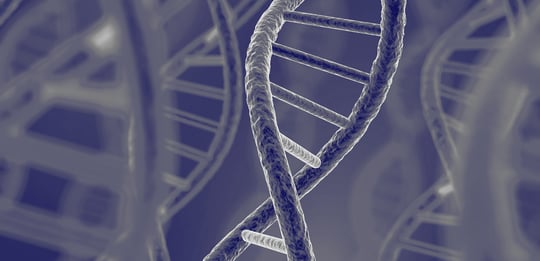
At its core, genetic induction refers to the control of gene expression, the process by which genetic information flows from DNA to RNA and then to proteins. Because proteins drive nearly all cellular functions, controlling their synthesis is essential for survival.
Operons: the classic model
Bacteria often organize genes into operons, where multiple genes involved in a metabolic pathway are transcribed together as a single mRNA. The textbook example is the lac operon in Escherichia coli:
-
No lactose present: A repressor protein binds to the operator region, blocking transcription.
-
Lactose present: The inducer (allolactose) binds to the repressor, causing a conformational change that frees the operator, allowing transcription.
-
Both lactose and glucose present: Glucose, the preferred substrate, triggers catabolite repression via cyclic AMP and Catabolite repressor protein (CRP), ensuring energy efficiency.
This elegant system illustrates how bacteria optimise resource use and respond almost instantaneously to environmental cues.
Regulons: coordinated responses to stress
Not all challenges can be solved by regulating a single operon. Sometimes, bacteria must mobilise dozens of genes simultaneously. This is where regulons come into play.
The SOS regulon
When bacterial DNA is damaged, by chemicals or radiation, the SOS regulon activates. Normally repressed by the LexA protein, these genes are unleashed when the RecA protein senses DNA damage and cleaves LexA, triggering a cascade of repair and survival functions.
Other stress regulons
-
Heat shock regulon: Activated in bacteria by high temperatures via alternative sigma factor σ32.
-
Cold shock regulon: Induced by sudden cooling, involving RNA conformational changes.
-
pH and alkaline shock regulons: Help bacteria cope with acidic or alkaline environments.
These systems show that bacterial adaptation is not a simple on/off process. It is global, highly dynamic and often triggered only under specific physiological conditions. This is why static genome-based characterisation alone cannot fully describe a strain’s safety profile.
Attenuation: fine-tuning at the RNA level
Induction doesn’t always happen at the transcription level. Attenuation is a mechanism that regulates gene expression at the translational level, after mRNA synthesis has begun.
A classic example of attenuation is the tryptophan operon. In the tryptophan biosynthetic operon, a leader sequence and RNA stem-loop act as a transcription stop signal. When tryptophan is abundant, transcription halts. When tryptophan is scarce, the ribosome stalls, altering RNA structure and allowing transcription to continue.
This subtle control mechanism has real-world implications for antibiotic resistance, such as regulation of erm genes for macrolide resistance and some cat genes for chloramphenicol resistance.
Why genetic induction matters for safety
Biogenic amines: acidic environments switch them on
Certain bacteria produce biogenic amines (e.g., histamine, tyramine) as an adaptation to low pH. While this helps bacteria survive acidic environments, these compounds can cause adverse physiological effects in humans, such as histamine poisoning.
Because induction drives this behaviour, assessing biogenic amine formation is especially important when new strains are used in fermented foods such as cheese or sausages.
“Biogenic amine formation is induced by low pH and other factors. Companies introducing novel strains in fermented products, such as cheese or sausages, should prudently check for this phenotype.”
— Professor Atte von Wright
Although some regulatory documents do not explicitly require biogenic amine analysis, it is considered best practice for microbial novel foods and fermented products.
Inducible antibiotic resistance: invisible until triggered
Many antibiotic resistance genes are inducible, meaning they activate only in the presence of sub-inhibitory antibiotic concentrations. Ignoring this can lead to false negatives in phenotypic tests and therapy failures.
Examples:
-
Attenuation-based induction: Erythromycin resistance genes (ermC, ermK) activate via mRNA conformational changes.
-
Conventional induction: Triggered by antibiotics binding to cell wall components, initiating signalling cascades.
Because inducible resistance depends on activation signals, genome sequencing alone cannot reliably predict whether resistance will manifest in real use conditions.
“Genome analysis alone cannot reliably predict resistance activation. Phenotypic testing, such as MIC testing by dilution, is essential to avoid false negatives.”
— Professor Atte von Wright
Practical takeaways for safety and regulatory work
-
Assess biogenic amine production when introducing new strains into fermented foods.
-
Perform phenotypic antibiotic resistance testing using dilution MIC methods in line with EFSA guidance. Disc diffusion methods may fail to detect inducible resistance.
-
Recognise that static characterisation is insufficient. Induction phenomena mean that some traits only appear under specific environmental conditions. Safety evaluations must therefore consider dynamic, context-dependent behaviour.
Understanding induction helps ensure that safety evaluations reflect how bacteria behave in the real world, not only how they appear in a sequencing report.
Planning safety work for microbial strains?
Biosafe supports companies developing microbial ingredients, fermented products, and precision fermentation strains.
From genomic characterisation to phenotypic testing and EU/US dossier preparation, we help ensure that dynamic bacterial traits are assessed with scientific accuracy.
Continue the conversation

Contact our experts!
|
|
|